Design Workshops as a Research Tool
Design Workshops as a Research Tool
Design Workshops as a Research Tool
Design Workshops as a Research Tool
Design Workshops as a Research Tool
Design Workshops as a Research Tool
April 2024

I had the opportunity to use a design workshop as a research tool during my first full-time job as a product manager. The conclusion I drew is that it is an excellent way to involve people from diverse backgrounds and departments, and evoke great ideas. However, it is more costly and time-consuming compared to other, relatively lighter-weight research methods like interviews. It is an ideal approach to bring different perspectives together and allow people to directly share their ideas through activities like journey mapping or concept drawings, provided there is sufficient time and support from department leads
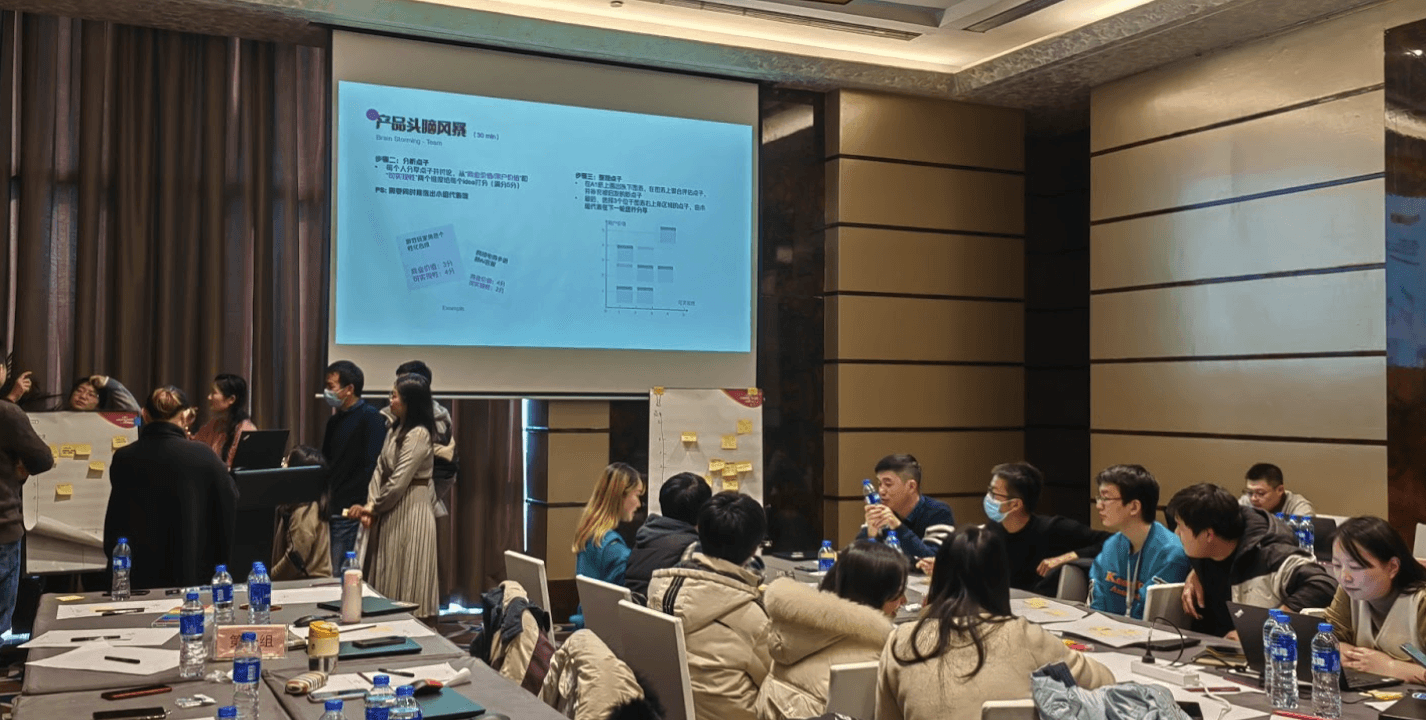
Reflecting on the design workshop I mentioned, it took place when I was working for an AI company. At the beginning of a new year, my boss proposed having a meeting to discuss potential new products we could create based on our existing AI capabilities. Given a week to prepare a meeting with around 40 people from various departments, I searched for interventions I could use to facilitate the event. I came across IDEO's design thinking workshop, which combines several great brainstorming and design activities, including diverging and converging phases to ensure the meeting leads to more tangible concepts or products. I created a slide deck to guide participants through the activities and prepared artifacts such as standing whiteboards, large sheets of paper, sticky notes, markers, and tape. It proved effective, as people engaged actively in the meeting by drawing on and with these artifacts. The workshop went exceptionally well. All participants were divided into four groups, allowing them to collaborate on the activity topics and have representatives share their ideas and insights afterward. I also found the workshop atmosphere to be much more relaxed and comfortable compared to focus groups or interviews, as participants felt free to talk and socialize. This relaxed vibe is essential for evoking ideas and candid sharing.
Based on this experience, I had the idea of bringing such design interventions and a relaxed vibe to even one-on-one interviews or more formal research methods. Instead of conducting interviews in an office room or meeting strangers on Zoom, it would be better to do it in a coffee shop atmosphere. I could also create a design research artifact board game, allowing us to engage in activities like card sorting or concept drawings.
I had the opportunity to use a design workshop as a research tool during my first full-time job as a product manager. The conclusion I drew is that it is an excellent way to involve people from diverse backgrounds and departments, and evoke great ideas. However, it is more costly and time-consuming compared to other, relatively lighter-weight research methods like interviews. It is an ideal approach to bring different perspectives together and allow people to directly share their ideas through activities like journey mapping or concept drawings, provided there is sufficient time and support from department leads
Reflecting on the design workshop I mentioned, it took place when I was working for an AI company. At the beginning of a new year, my boss proposed having a meeting to discuss potential new products we could create based on our existing AI capabilities. Given a week to prepare a meeting with around 40 people from various departments, I searched for interventions I could use to facilitate the event. I came across IDEO's design thinking workshop, which combines several great brainstorming and design activities, including diverging and converging phases to ensure the meeting leads to more tangible concepts or products. I created a slide deck to guide participants through the activities and prepared artifacts such as standing whiteboards, large sheets of paper, sticky notes, markers, and tape. It proved effective, as people engaged actively in the meeting by drawing on and with these artifacts. The workshop went exceptionally well. All participants were divided into four groups, allowing them to collaborate on the activity topics and have representatives share their ideas and insights afterward. I also found the workshop atmosphere to be much more relaxed and comfortable compared to focus groups or interviews, as participants felt free to talk and socialize. This relaxed vibe is essential for evoking ideas and candid sharing.
Based on this experience, I had the idea of bringing such design interventions and a relaxed vibe to even one-on-one interviews or more formal research methods. Instead of conducting interviews in an office room or meeting strangers on Zoom, it would be better to do it in a coffee shop atmosphere. I could also create a design research artifact board game, allowing us to engage in activities like card sorting or concept drawings.